I still remember the collective eye-roll when Margot Robbie announced she would produce a Monopoly movie. It was 2024, and the world was still soaking in the pink-hued glow of Barbie. The internet erupted with memes – a board game about ruthless capitalism getting the Hollywood treatment? But fast-forward to 2026, and I'm sitting in a theater watching the final trailer for Monopoly, genuinely excited. How did we get here?
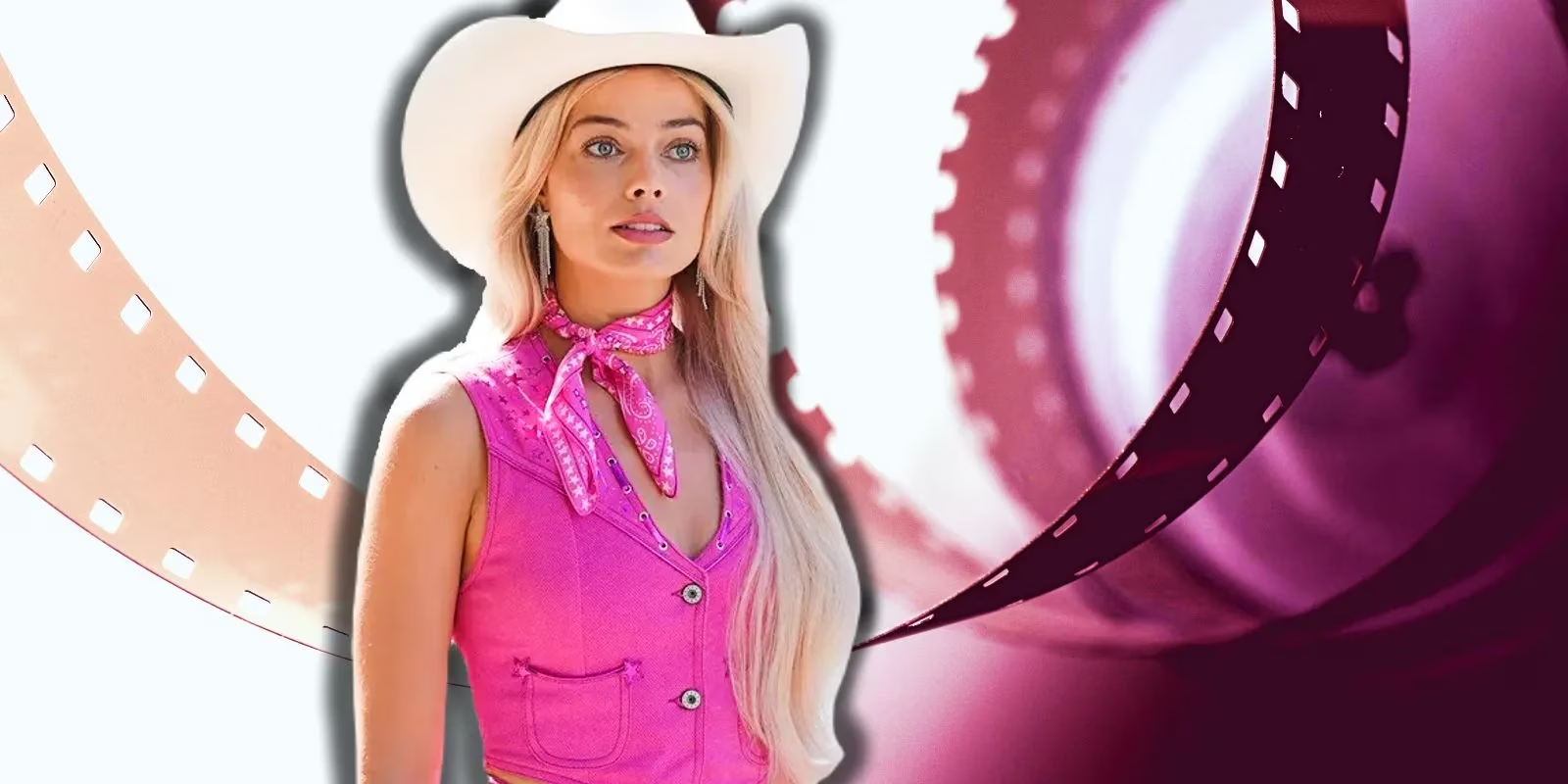
The answer starts in 2023, when Barbie didn't just succeed – it detonated. Greta Gerwig and Margot Robbie turned a plastic doll into a cultural phenomenon, earning nearly $1.5 billion worldwide and snagging 191 awards along the way. What stunned me most wasn't the box office but the sheer creative audacity: a movie that mixed Barbieland's saturated fantasy with real-world existentialism, all while delivering biting commentary on patriarchy and self-worth. No one saw it coming, least of all the studio executives who'd greenlit the project with cautious optimism. Robbie, as both star and producer, proved that a toy adaptation could be smart, subversive, and massively profitable.
Then came the announcements. In early 2024, Robbie’s production company LuckyChap confirmed a Sims movie – another game with no built-in narrative, no heroes, no villains. A few months later at CinemaCon, they dropped the Monopoly bomb. A live-action film based on a game where everyone eventually flips the board in frustration. At that point I thought Robbie had lost her mind, or perhaps she was just trolling Hollywood. After all, the Monopoly movie had been stuck in development hell since 2008, bouncing between Universal, Ridley Scott, Kevin Hart, and endless rewrites. It felt cursed. But LuckyChap didn’t care about curses; they’d already broken the “impossible adaptation” barrier once.
Now here we are in 2026, and Monopoly is weeks away from release, with a script co-written by a Pulitzer-winning playwright and a director known for dark social satires. The casting is genius – an ensemble of character actors playing archetypes like the Thimble, the Top Hat, the Boot – actual characters invented for the film, each trapped in a surreal, board-shaped city where they must buy their way to freedom. It’s The Truman Show meets Parasite, and I’m giddy.
This whole trajectory feels like the strangest Hollywood trend in decades. We’ve had dog movies (that Rin Tin Tin era produced 29 films), sea-monster knockoffs after Jaws, and holiday slashers post-Halloween. But a single actress-producer building an empire out of board game and toy adaptations? That’s uncharted territory. Robbie started her career as a dramatic actress – Harley Quinn, Tonya Harding, Queen Elizabeth I – not someone you’d peg as a champion of toy cinema. Yet after Barbie, the fit became almost obvious. She understands that these games and toys aren’t just nostalgia triggers; they’re blank canvases for exploring contemporary anxieties. Barbie tackled gender roles. The Sims will likely dive into control, simulation, and the illusion of free will. And Monopoly? That’s the crown jewel of critique. 💎
What makes Monopoly work in 2026 is exactly what made Barbie work. The film doesn’t take the game literally. Instead, it builds a world where the board’s rules are brutally real. The story follows a group of ordinary people sucked into a Monopoly metropolis where every street, every utility, every railroad is owned by a shadowy corporate entity called The Bank. The characters must navigate wage stagnation, predatory lending, and gentrification – all while trying not to go bankrupt. It’s an “eat the rich” fever dream, and millennials and Gen Z, who already despise capitalism, will eat it up. The trailers have gone viral with the tagline: “In this game, passing GO doesn’t save you.” 🎩🏨
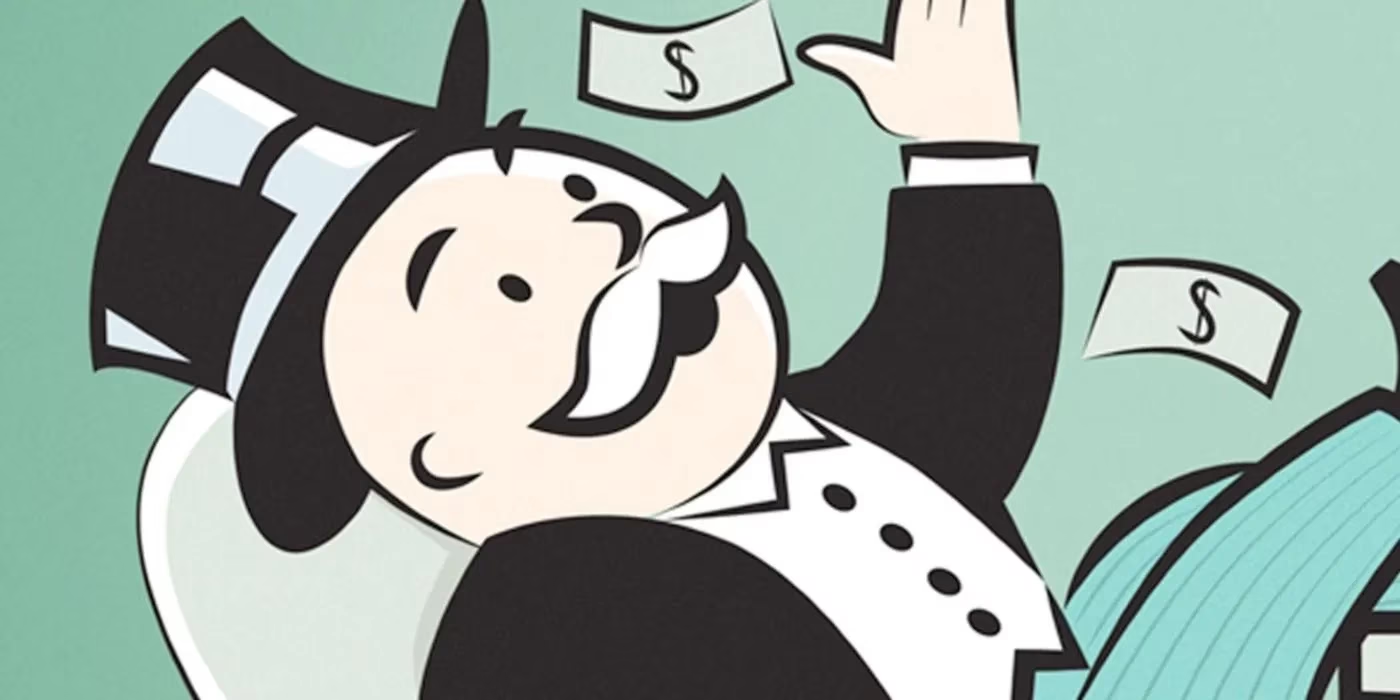
Barbie laid the framework: blend the fictional and the real, then weaponize nostalgia to deliver uncomfortable truths. Monopoly takes that formula and darkens it. Robbie’s genius lies in choosing properties that aren’t just popular – they’re moral playgrounds. The game Monopoly was ironically designed by Lizzie Magie in 1903 to illustrate the dangers of wealth concentration. The movie, I suspect, will honor that original intent while wrapping it in glossy, must-watch entertainment. Earlier attempts to make Monopoly (like the 2008 version) would have failed because studios would have made a silly board-game romp. But in 2026, with economic inequality at the forefront of public discourse, Robbie’s version feels urgent.
I’ll admit, I was a skeptic. When I first heard about a Monopoly movie, I imagined a soulless cash grab full of cheap gags about Free Parking. Now I’m lining up for opening night. Margot Robbie has hacked the Hollywood system by turning childhood artifacts into Trojan horses of social commentary. Her streak isn’t just weird – it’s a masterclass in reinventing IP cinema. If Monopoly sticks the landing, I won’t be surprised to see LuckyChap announce a Clue reboot, a Guess Who? psychological thriller, or even a Candy Land horror movie. And I’ll be there for every single one. 🍿